
About This Game
Core Puzzle Mechanics
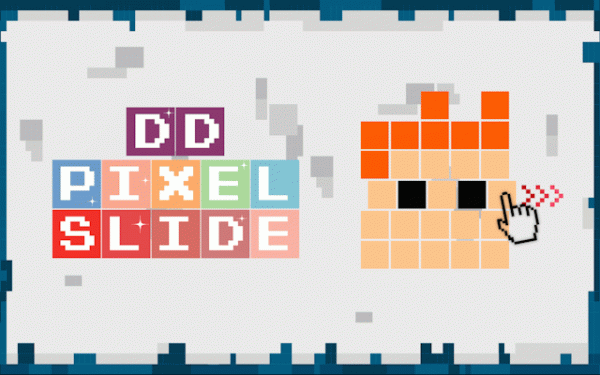
At its heart, this game asks players to reorganize a grid of pixelated squares to replicate a given design. Each move involves sliding a tile into an adjacent empty cell, gradually shifting the entire arrangement toward the goal. The process demands careful observation and forward planning, as each action affects the positions of surrounding pieces. Early configurations use simple shapes and limited tiles, allowing newcomers to grasp the flow without pressure. As players advance, the patterns grow more intricate, requiring deeper concentration and methodical step-by-step thinking.
Visual Style and Atmosphere
The retro pixel art gives every puzzle a distinct personality, with bright colors and blocky forms that evoke classic arcade aesthetics. Each completed pattern reveals a small, satisfying image, from geometric designs to simple icons. The clean interface keeps distractions minimal, letting the player focus entirely on the task. Soft background tones and subtle animations create a relaxed environment, making the experience feel more like a thoughtful pastime than a high-pressure challenge.
Progression and Difficulty Curve
The game structures its levels to gradually increase in complexity without sudden jumps. Initial puzzles use small grids and obvious patterns, building confidence and familiarity with the sliding mechanic. Later stages introduce larger boards and more abstract targets, encouraging players to develop strategies for efficient tile movement. This steady ramp-up ensures that each new puzzle feels like a natural next step, maintaining engagement without causing frustration. Players who complete all standard levels can continue to refine their skills through the custom content system.
Custom Content and Sharing
A built-in level editor allows players to create their own tile arrangements and share them with others. This feature extends the game's lifespan significantly, as the community can generate an endless supply of fresh challenges. Designing a puzzle involves placing tiles to form a desired pattern, then setting the starting scrambled state. Shared puzzles can be accessed through simple links, making it easy to exchange creations with friends or online groups. This tool also serves as a learning aid, helping players understand puzzle structure by building their own.
Accessibility and Platform Support
Built as an HTML5 application, the game runs directly in any modern web browser on desktop computers, tablets, and smartphones. No installation or account creation is required, so players can jump into a puzzle within seconds. Controls adapt to the device: mouse clicks on desktop, touch taps on mobile. The interface scales to fit different screen sizes, ensuring that tiles remain easy to see and interact with regardless of the device. This cross-platform compatibility makes it a convenient option for on-the-go play or short breaks at home.



Comments
0 comments