
Core Climbing Mechanics
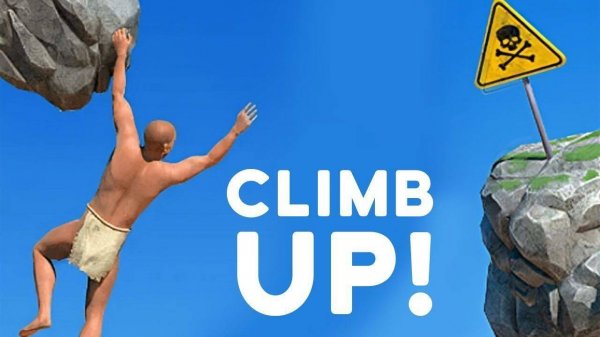
This arcade-style climbing game centers on realistic physics that govern every movement. Players control a character ascending a vertical mountain path. The character's momentum and grip respond to player input, creating a system where each action has a direct consequence. Unlike simple platformers, this game demands an understanding of weight and balance. A hasty jump might send the character sliding backward, while a well-timed grab secures a stable hold. The controls are straightforward, but mastering the physics requires practice and observation. The game does not rely on complex button combinations, allowing players to focus entirely on the character's interaction with the environment.
Obstacle Variety and Design
The mountain presents a range of obstacles that evolve as players climb higher. Early sections introduce slippery patches of ice that reduce traction, requiring careful foot placement. Later, rolling stones appear, forcing players to time their movements between hazards. Gaps in the path demand precise jumps, where misjudging distance leads to a tumble downward. The obstacles are arranged to create natural puzzles, where players must identify the safest route through a sequence of threats. The variety ensures that no two climbs feel identical, as the combination of hazards changes with each attempt. The design encourages players to study patterns and adapt their strategy accordingly.
Progression and Skill Development
Progress in this game is measured by the height achieved on each attempt. The game tracks the farthest point reached, providing a clear goal for improvement. As players climb higher, they encounter more complex obstacle arrangements that require faster reactions and better planning. The difficulty curve is gradual, allowing beginners to build confidence on lower sections before tackling advanced challenges. The game does not feature a traditional level system; instead, the mountain itself serves as a continuous challenge. Each fall offers a learning opportunity, as players can identify what went wrong and adjust their approach. This structure rewards persistence and careful analysis over speed.
Visual Style and Family Appeal
The visual presentation is clean and colorful, with a focus on readability. The mountain environment is depicted with clear contrasts between safe surfaces and hazards, making it easy for players to assess risks at a glance. The character animations are smooth, conveying the effort and weight of each movement. The game is designed to be accessible to players of all ages, with no mature themes or violent content. The challenge comes from the physics and obstacle navigation, not from any inappropriate elements. This makes it a suitable choice for family play, where parents and children can take turns attempting the climb. The straightforward premise and intuitive controls lower the barrier to entry, while the depth of the physics system provides lasting engagement for more experienced players.



Comments
0 comments